 English
 Français
 Deutsch
 Español
 Italiano
 Português
Omnichannel Call Center
Unify voice, email, chat, SMS, and social messaging to deliver a more consistent customer experience
What is an Omnichannel Call Center?
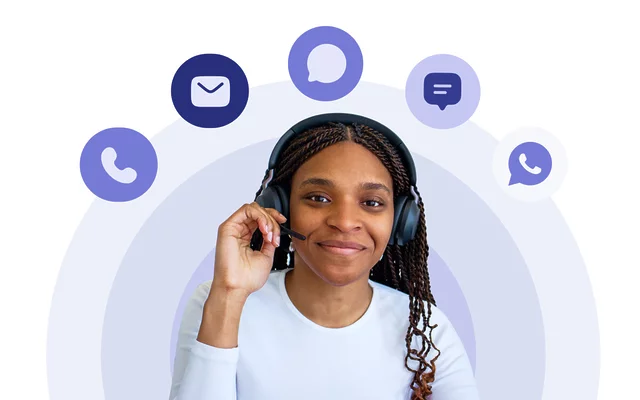
An omnichannel call center is a single, unified platform that brings together every customer communication channel—voice calls, email, live chat, SMS, and social interactions—into one seamless system. Instead of managing separate tools for each channel, agents work from a single interface where the full conversation history travels with the customer. This means no more “Sorry, I don’t have access to that information” moments. Every interaction is connected, contextual, and continuous, regardless of how the customer chooses to reach you.
What are the Benefits of an Omnichannel Call Center?
Deliver a more consistent customer experience across channels
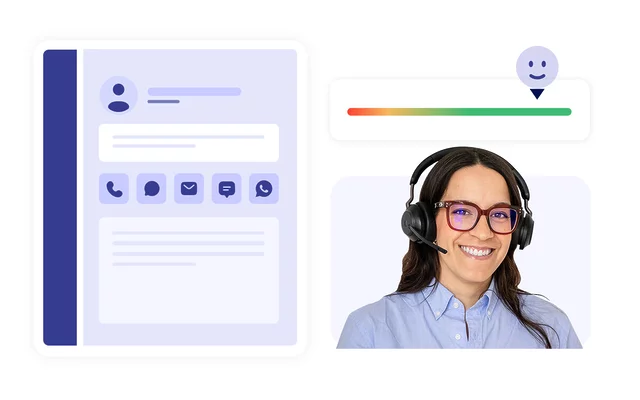
Customers move freely between channels—starting a conversation on chat, then switching to email or calling for clarification. An omnichannel system ensures the context, history, and details follow them automatically. This creates a smooth, uninterrupted journey where every team member sees the same complete picture, resulting in faster answers, fewer repeated questions, and a reliable brand experience no matter which channel is used.
Improve team productivity with unified conversation history
Agents no longer waste time switching between multiple applications or asking customers to repeat information. All past interactions across channels appear in one clean view, so agents can pick up exactly where the conversation left off. This reduces handling time, eliminates duplication of effort, and lets teams focus on solving the issue instead of hunting for data.
What are the challenges of an Omnichannel Call Center?
Connecting channels and customer data effectively
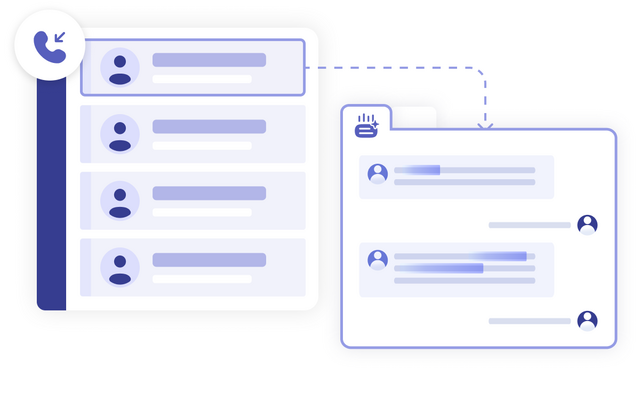
The main difficulty is making sure every channel is actually connected to the others and that customer data stays accurate and synchronized in real time. Without proper integration, information can become fragmented, leading to gaps that slow down service and frustrate both agents and customers.
Maintaining service quality across every touchpoint
When interactions happen across so many different channels, it can be hard to keep standards consistent. Different channels often have different response expectations and workflows, which can create uneven experiences if the underlying platform isn’t designed to enforce the same quality rules everywhere.
Which teams benefit from Omnichannel Call Centers?

Customer service teams
They gain a complete view of every customer journey in one place, making it easier to resolve issues quickly and provide helpful, context-aware support across all channels without losing any details between handoffs.
Sales teams
Omnichannel gives sales teams instant access to the full interaction history—previous chats, emails, or calls—so they can personalize outreach, follow up at the right moment, and move opportunities forward more efficiently.
Remote and international teams
Teams spread across time zones or countries can collaborate seamlessly because everything lives in one cloud-based platform. Agents and supervisors get the same real-time visibility and unified tools, no matter where they are working.
How does Diabolocom solution allows call centers to turn omnichannel?
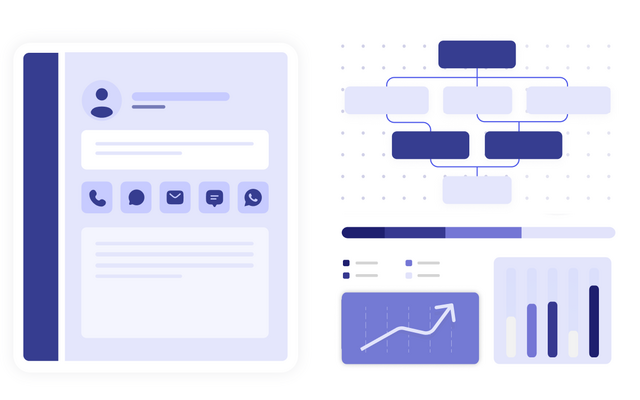
It provides a single cloud-native platform where voice, digital channels, and customer data are natively connected from day one. You define routing and workflow rules once, and the system automatically keeps conversations continuous across every channel while giving agents and supervisors one shared interface and real-time oversight.
FAQ
How does an omnichannel call center work?
It works by connecting all communication channels into one central system. When a customer starts on one channel and moves to another, the platform automatically links the interactions so the full history, context, and any open tasks travel with them. Agents see everything in a single unified view and can continue the conversation without starting over.
Why is an omnichannel call center important for customer experience?
Customers today expect to switch channels naturally without repeating themselves or losing progress. An omnichannel approach removes those friction points, creates continuity, and ensures every interaction feels connected and efficient—leading to smoother journeys and higher overall satisfaction.
Can agents see customer interaction history across multiple channels?
Yes. In a true omnichannel system, the entire conversation history—from voice calls, emails, chats, SMS, and social messages—appears together in one timeline inside the agent’s interface. No need to search separate systems or ask the customer to recap previous exchanges.
Can an omnichannel call center integrate with CRM software?
Absolutely. A well-designed omnichannel platform offers native integrations with major CRM systems so customer records, tickets, and interaction data stay automatically synchronized. This keeps everything up to date without manual entry or duplicate work.
How does Diabolocom help call centers deliver a seamless omnichannel experience?
It delivers a fully integrated, cloud-based platform built specifically for omnichannel operations. All channels work together natively, conversation history is automatically unified, and agents get one simple interface with real-time routing and supervision—making the transition to true omnichannel straightforward and reliable.