English
 Français
 Deutsch
 Español
 Italiano
 Português

What Is Conversational Analysis?
A Simple Definition of Conversational Analysis
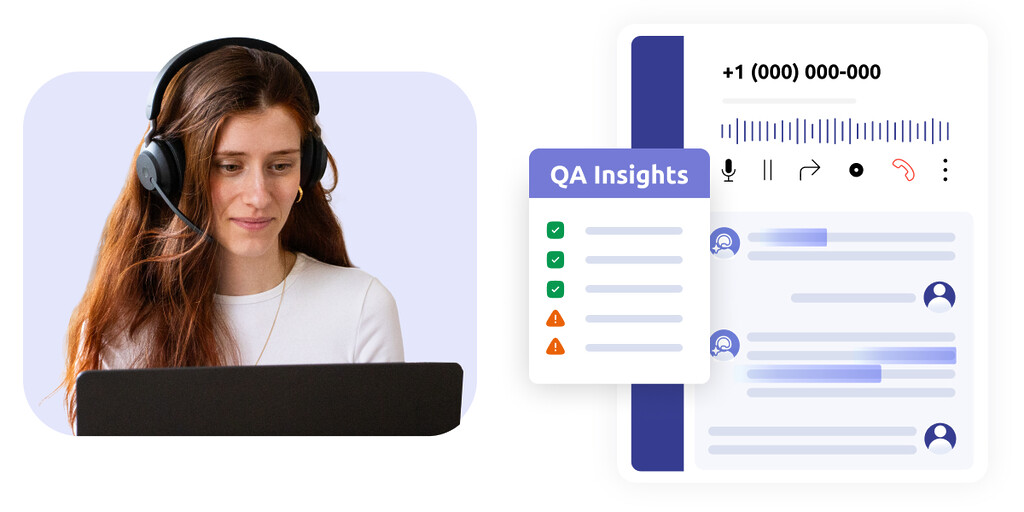
Conversational analysis refers to the methods and technologies used to analyze customer conversations and extract useful information from them. It can be applied to phone calls, written messages, chats, tickets, and other interactions handled by customer service teams.
In practice, a raw conversation is first captured, then converted into text when it comes from a phone call. This text can then be analyzed to identify the topics discussed, contact reasons, customer requests, answers provided, resolution steps, and follow-up actions. The goal is to make conversations usable at scale, without relying only on manual reading or listening.
This approach helps companies better understand what customers are truly asking for. It also reveals gaps between planned processes and what actually happens in the field. For example, a company may discover that a large number of calls are related to pricing confusion, a poorly explained delivery step, or an overly complex procedure. These insights can then become a starting point for improving customer journeys, help resources, scripts, training, or internal processes.
Why Conversational Analysis Is Becoming Central to Contact Centers
Contact centers generate a large number of conversations every day. Yet only a portion of these interactions is actually analyzed. Quality teams, supervisors, and managers do not always have time to listen to a representative volume of calls or read every written interaction. As a result, analysis often remains partial, even when teams already have access to performance indicators.
This is exactly where conversational analysis changes the game. It expands the scope of observation. Instead of focusing on a few examples, companies can identify trends across a much larger volume of interactions. They can detect rising contact reasons, topics that generate the most requests, processes that create misunderstandings, or moments when agents lack the information they need to respond effectively. However, conversational analysis still needs to be implemented strategically to deliver the best possible results.
Gartner summarizes this challenge well in “How to Deliver ROI With Conversation Analytics” 2024, explaining that customer service and support leaders often struggle to use conversation analytics to extract actionable insights and deliver return on investment.
This difficulty shows that technology alone is not enough. To create value, conversational analysis must be connected to clear goals: improving quality, reducing repetitive tasks, understanding pain points, strengthening training, or guiding operational decisions.
How Does Conversational Analysis Work in a Contact Center?
What Are the Main Use Cases for Conversational Analysis?
Understanding Contact Reasons and Customer Pain Points
The first major use case for conversational analysis is understanding why customers contact a company. By analyzing a large volume of interactions, businesses can identify the topics that come up most often. These may include delivery issues, refund requests, usability problems, pricing questions, billing errors, or misunderstood steps in the customer journey.
These insights are valuable because they come directly from the voice of the customer. They are not based only on surveys or declarative metrics. They show what customers spontaneously express when they reach out to the company.
This view also helps identify pain points that may not be visible otherwise. A spike in calls about a specific topic may reveal insufficient communication. Repeated questions about the same procedure may indicate that the FAQ is not clear enough. Follow-up actions that are often postponed after a call may show that an internal process is too cumbersome. Conversational analysis then becomes a continuous improvement tool, because it connects customer pain points to concrete actions.
Improving Service Quality and Supporting Agents
Conversational analysis can also strengthen quality management. In many contact centers, evaluations still rely on manually listening to a limited number of calls. This method remains useful, but it does not always provide a complete view of the true quality of customer interactions.
McKinsey notes in “AI mastery in customer care: Raising the bar for quality assurance,” 2024, that manual evaluation is often limited to a small share of conversations, sometimes less than 5%, with the risk of human bias affecting the accuracy of quality assessments.
Conversational analysis helps make certain improvement areas more objective. It can help verify whether procedures are followed, whether answers are clear enough, whether promised actions are properly identified, or whether certain requests require additional support. It does not replace the manager’s role, but it gives managers a broader foundation for understanding coaching needs.
This approach also helps support agents more fairly. Instead of basing feedback on a few isolated calls, managers can identify trends, spot the most difficult situations, and adapt training accordingly. The goal is not closer monitoring, but more targeted and useful improvement.
Reducing After-Call Work with Summaries and Categorization
After an interaction, agents often need to write a summary, categorize the request, update the CRM, or record next steps. These tasks are necessary, but they can be time-consuming and reduce team availability.
Conversational analysis can lighten this workload through automatic summaries, follow-up action detection, and contact reason categorization. After a call, the agent can receive a clear summary of what was said, the main request, the answer provided, and the next steps. The agent can then review, adjust, and validate the information before it is saved.
This automation is not designed to replace the agent. It is designed to reduce the administrative tasks that take agents away from their core role. By saving time on after-call work, agents can focus more on resolution, conversation quality, and customer support.
How to Use Conversational Analysis to Create a Better Customer Experience
Moving from Reporting to Continuous Improvement
The biggest mistake would be to treat conversational analysis as just another reporting tool. Dashboards are useful, but they do not create value unless they trigger decisions. The real question is: what do you do with the insights extracted from customer conversations?
When a contact reason increases, the company can review a process, clarify a help page, or adapt a customer communication. When a question comes up frequently, it can enrich its FAQ or improve a self-service journey. When an issue is reported repeatedly, it can be escalated to product, compliance, or operations teams.
Conversational analysis then becomes a driver of continuous improvement. It is not only used to understand what happened. It helps decide what needs to change.
Using Conversation Insights Beyond the Contact Center
Customer conversations are not only relevant to customer service teams. They contain useful information for several departments. Product teams can identify signals related to usability issues. Marketing teams can better understand the words customers actually use. Training teams can identify situations that require additional guidance. Quality leaders can track how pain points and processes evolve over time.
This cross-functional dimension is one of the greatest advantages of conversational analysis. It turns the contact center into a source of customer knowledge for the entire company. Interactions are no longer just requests to be handled. They become operational signals that can inform decisions far beyond customer service.
Finding the Right Balance Between Automation, Human Oversight, and Trust
To succeed, conversational analysis must be implemented thoughtfully. Teams need to understand why conversations are being analyzed, which data is being used, what objectives are being pursued, and how the results will be used. Transparency is essential to building trust.
Human oversight also remains critical. Summaries, categories, and recommendations must be easy to verify, correct, and improve. Conversational analysis should help teams make better decisions, not impose an automated interpretation without context.
Data quality, confidentiality, indicator selection, and gradual integration into existing processes are also key success factors. An effective approach often starts with a few priority use cases, then expands as teams become more mature. This gradual approach is what makes conversational analysis a lasting driver of performance and customer experience.
Conclusion
Conversational analysis is becoming a key lever for better understanding customers, improving customer journeys, and strengthening contact center performance. It helps companies move beyond a partial view of the customer relationship, based on a few indicators or a small sample of interactions, and gain a more complete understanding of what is really being said in customer conversations.
Its value does not lie in the technology alone. Above all, it depends on the company’s ability to turn insights into concrete decisions. Identifying pain points, supporting agents more effectively, reducing after-call tasks, adapting customer journeys, or escalating recurring issues are all actions that give meaning to the analysis.
By placing conversations at the center of continuous improvement, companies can create a clearer, more consistent, and more effective customer relationship. They no longer simply measure performance after the fact. They learn, adjust, and improve from every interaction.
With Diabolocom, conversational analysis is part of a broader approach to customer relationship management. Diabolocom’s AI-powered cloud contact center solution helps companies make better use of the richness of their conversations while staying grounded in the everyday workflows of their teams. Interactions are no longer handled one by one. They become a continuous source of learning to understand customer needs, improve journeys, and guide decisions that reflect what really happens in the field.
Obtain automated insights with an AI-powered conversational analysis tool