English
 Français
 Deutsch
 Español
 Italiano
 Português
Activity peaks and highlights – the impact on retail and customer relations
Black Friday is an unmissable commercial phenomenon, characterized by a significant increase in activity as impatient consumers wait until the end of November to make their Christmas purchases. This period of massive sales, initially rooted in North American consumer culture, has found its way into the mores of international buyers, who rush to take advantage of the advantageous discounts.
Every year, Black Friday continues to break records around the world. Over the November period, including Cyber Monday, global online sales often exceeded tens of billions of dollars. For example, Shopify, an e-commerce platform, reported that its merchants worldwide sold over $2.9 billion during Black Friday/Cyber Monday in 2020.
These figures testify to Black Friday’s transformation into a crucial element of commercial activity, on a par with traditional high-consumption periods such as seasonal sales and holidays like Valentine’s Day. To capitalize on these peaks in customer service, it’s imperative for retailers to deploy strategies aimed at enhancing the customer experience.
For industry professionals, financial success is intrinsically linked to their ability to manage these seasonal influxes. Proper preparation is therefore essential to avoid missing out on crucial sales. The effective management of a large volume of customer requests, particularly in terms of after-sales service and customer support, becomes a major challenge.
How do you manage call peaks during peak seasonal periods?
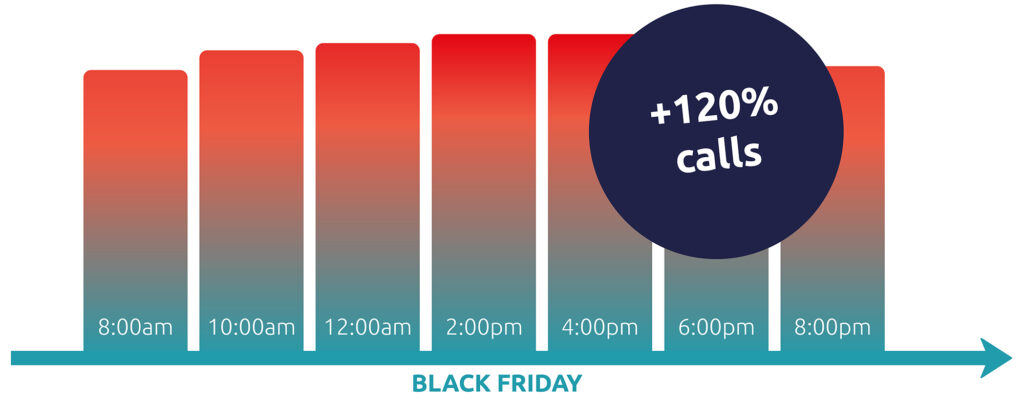
The buzzwords? for better managing call peaks during Black Friday are preparation and anticipation.
1 – Preparation:
To prepare your customer service department to effectively manage call peaks during events such as Black Friday or Valentine’s Day, it’s crucial to analyze data from previous years. This enables you to anticipate call volumes and determine when peaks are most likely to occur. With this analysis, you can properly plan your human resources and optimize call routing to avoid bottlenecks. In addition, preparation must also take into account the extended hours of these events since many businesses open later and may receive calls outside normal hours. It’s therefore essential to have a plan in place to handle out-of-hours calls, whether through an efficient answering machine or advisors available to meet customers’ after-hours needs.
2 – Anticipation:
To anticipate customer needs and guarantee an immediate response to their queries during these busy periods, the deployment of an omnichannel strategy is imperative. This strategy involves using both telephone and other digital channels to be the favored point of contact between the brand and its customers. By anticipating frequently asked questions and communicating clearly, you avoid overloading phone lines and improve the customer experience. Managing customer interaction needs to be fluid and personalized, which can be a challenge, but innovative solutions are available to complement omnichannel platforms and manage call peaks. By promptly and accurately answering potential buyers’ questions, your customer service can remove doubts and solidify customer confidence, confirming their intention to buy. It’s important to recognize that it’s humanly impossible to respond to all requests during a transaction peak, so careful preparation and the adoption of appropriate technologies are necessary to ensure a quality customer experience.
Call peaks: what tools are available to handle the volume of calls?
To manage call peaks and maintain customer satisfaction, especially at busy times like Black Friday, it’s essential to implement effective tools such as interactive voice response (IVR) and call routing (ACD).
1 – Interactive Voice Response (IVR):
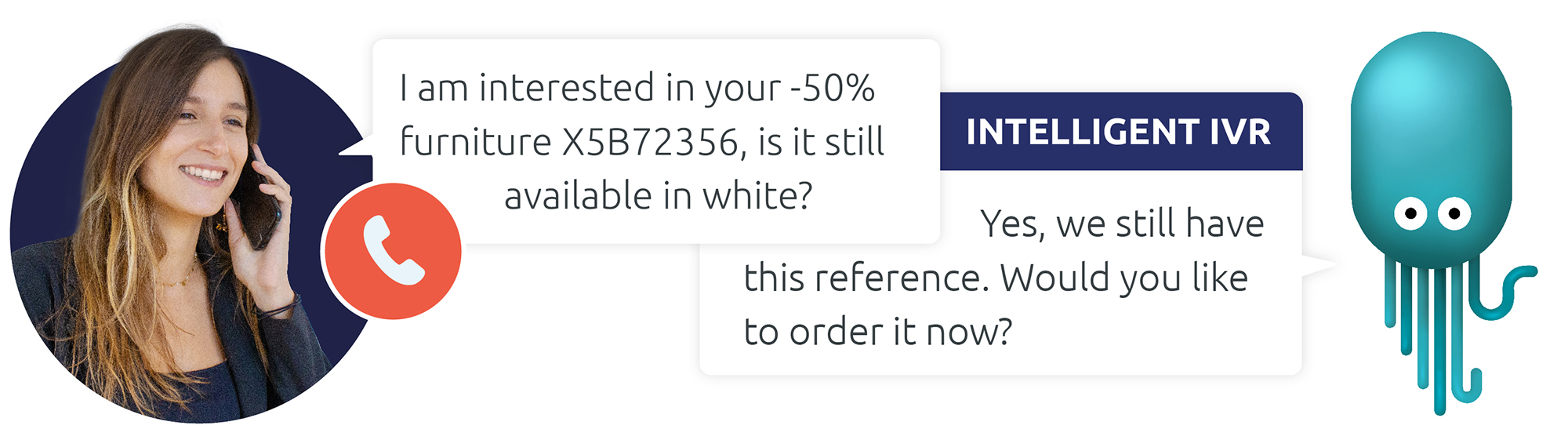
Implementing an intelligent IVR is another key strategy. Customers with seasonal call peaks will turn to customer service for simple, fairly predictable information requests and problems. An intelligent IVR allows customers to interact with an automated system capable of understanding natural language, offering an immediate solution to their queries without the need for agent interaction. This can reduce the load on live agents, who can then concentrate on more complex cases.
2 – Call routing (ACD):
The use of a call routing system is crucial to managing the high volume of incoming calls. Call routing automatically redirects calls to the most appropriate available agent, reducing waiting times and minimizing customer frustration. Not only is the ACD system a tool for improving customer service efficiency by distributing the workload fairly, but it also provides valuable data on call trends. This information can be used to further optimize customer service. For example, Diabolocom’s ACD solution is designed to ensure proper distribution of incoming calls, ensuring smooth management even during peak periods.
Integrating Business Tools and Leveraging Communication Analytics
CRM and Business Tool Integrations to Centralize Interactions
Integrating your telephony system with business tools—especially CRM platforms—is essential for handling call spikes effectively. When an incoming call is automatically logged in the CRM, the agent immediately sees the full customer history: past orders, open tickets, previous interactions across channels, and more.
This continuity between channels (phone, email, chat, etc.) creates a smoother, more consistent experience. Companies can maintain high service levels even when pressure rises during Black Friday or seasonal sales.
Advanced Analytics and Dashboards for Real-Time Management
Contact centers can access dashboards with advanced analytics to review data from previous seasons, monitor live call volumes, identify spikes, evaluate team performance, and uncover recurring reasons for contact.
These dashboards make it possible to adjust resources in real time, prioritize urgent or sensitive calls, and anticipate critical moments. Actionable insights allow faster, more informed decisions—crucial for managing high-traffic periods.
Implement a crisis plan
To better manage call peaks during commercial high points such as Black Friday, it’s essential to draw up a crisis plan in anticipation of anything that might happen.
Extra agents: in some cases, it’s possible to find yourself with call peaks linked to other unexpected problems, such as a platform failure in the middle of a sale, delivery problems, and so on. In such cases, if the call peak exceeds the most anticipated, it is essential to arm yourself with additional face-to-face or teleworking staff to absorb the volume of incoming calls.
Adapting working hours: adapting working hours to the growing needs of seasonal peaks, with rotating shifts. Start earlier and finish later, with agents taking turns to provide the best possible response to all requests. This will avoid creating a backlog of requests, irritating callers, and overloading advisors.
Telephone queues: by creating different queues for different requests, calls can be better redistributed during peak periods. The benefits of using queues include fewer dropped calls and the ability to redirect calls to the right departments.
Black Friday and Call Spikes: Callbacks and Number Reputation Monitoring
Callback: A Must-Have for Managing High Volumes
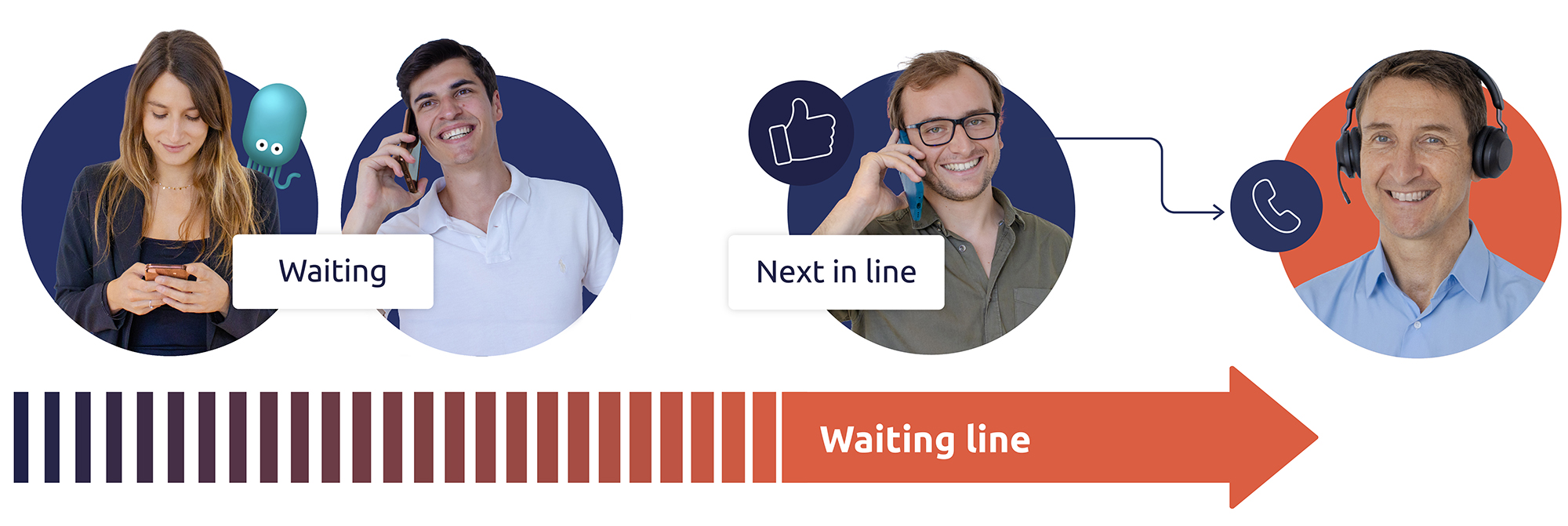
Callback is a key feature for maintaining a positive customer experience when queues get longer. Instead of waiting on hold, customers can opt to be called back automatically as soon as an agent is available.
This reduces frustration and helps spread workload more evenly throughout the day. It also sends a strong message: customers’ time is respected, even during peak demand.
Number Reputation Monitoring to Prevent Blocking
During high-volume periods like Black Friday, outbound call traffic can increase so sharply that some carriers or mobile devices temporarily flag numbers as “suspicious” or “potential spam.” Monitoring number reputation becomes critical.
With tools like Diabolocom’s Number Reputation Checker, companies ensure their numbers remain trustworthy and recognized, preventing calls from being blocked or mislabeled. This guarantees optimal reachability even when outbound volume surges.
Leveraging Artificial Intelligence to Manage Call Spikes
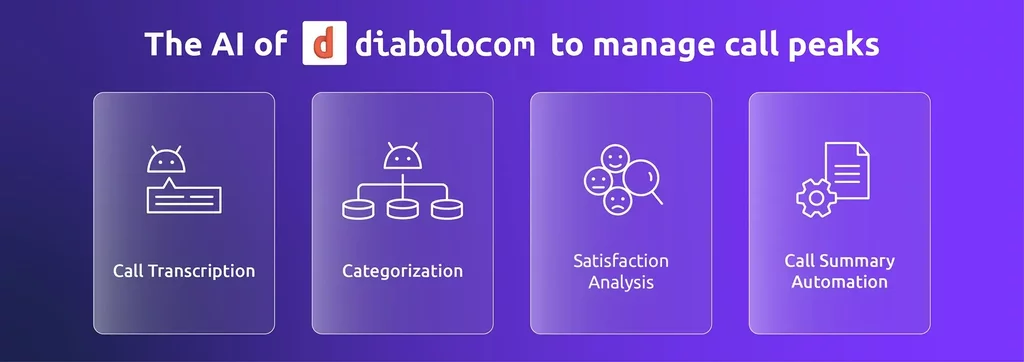
AI plays a strategic role in managing call surges, especially during intense periods like Black Friday. Two key technologies stand out: voice analytics and automated self-service solutions.
Voice Analytics automatically analyzes large volumes of phone conversations. By identifying recurring issues, irritants, and signals of dissatisfaction, it gives supervisors immediate clarity on priorities. During peak periods, this real-time understanding helps refine processes, update customer communications, or reallocate resources more efficiently.
Meanwhile, self-service tools—such as virtual agents, dynamic FAQs, or intelligent helpdesks—handle a significant share of simple requests by providing instant, personalized answers around the clock. This reduces team workload, shortens handling times, and allows agents to focus on more complex cases.
Together, these technologies help deliver a smooth customer experience and steady service levels, even when activity reaches its highest point.
Curious to know more about Diabolocom?